How to get a 5 food hygiene rating
A 5 is the top food hygiene rating. This guide shows what the officer scores and how the scores become a rating, with a worked example. The scheme runs in England, Wales and Northern Ireland. The scoring here comes from English sources (the code of practice for England and three English councils); Welsh and Northern Irish documents were not checked. Scotland's scheme is different and comes at the end.

What the rating is and who gives it
The Food Standards Agency runs the Food Hygiene Rating Scheme with local councils. A food safety officer from your council inspects your business and gives the rating.
The rating shows how well your business met food safety standards when it was last inspected. Government guidance says it is not a guide to food quality.
There are six ratings: 5 very good, 4 good, 3 generally satisfactory, 2 some improvement necessary, 1 major improvement necessary, and 0 urgent improvement necessary.
Inspections are usually unannounced. You are told your rating, and the reasons for it, in writing at the inspection or within 14 days.
The three things an officer scores
Government guidance names three areas:
Food handling
Preparation, cooking, reheating, cooling and storage.
The physical condition of the business
Cleanliness, layout, lighting, ventilation, pest control and facilities.
Food safety management
Your processes, training and systems. The English code of practice calls this "confidence in management".
Each area gets a score, and a lower score is better. Food handling and the physical condition are each scored 0, 5, 10, 15, 20 or 25. Confidence in management is scored 0, 5, 10, 20 or 30.
How the scores become a rating
The three scores are added up. Three English councils, Derby, Cheltenham and Bath and North East Somerset, publish the same totals and highest-score limits. In the versions read for this guide the rating numbers are not printed beside the rows, so each row is matched to a rating by its order and wording. The Food Standards Agency's own table could not be read when this guide was checked.
| Rating | Total score | Highest score in any one area |
|---|---|---|
| 5 very good | 0 to 15 | 5 |
| 4 good | 20 | 10 |
| 3 generally satisfactory | 25 to 30 | 10 |
| 2 some improvement necessary | 35 to 40 | 15 |
| 1 major improvement necessary | 45 to 50 | 20 |
| 0 urgent improvement necessary | more than 50 | Not listed |
One weak area can stop a 5. Each row has two limits: a total, and the highest score any one area may have. For a 5, no area can score more than 5, however low the other two scores are. The documents read do not spell out every combination, or which rating you get when the total and the highest score point to different rows.
What moves the "confidence in management" score
Retained Regulation 852/2004, Article 5, requires food businesses (after primary production) to put in place, carry out and maintain permanent procedures based on HACCP principles. The procedures must be reviewed when a product, a process or any step changes. Government guidance says your system must be scaled to the size, risk and complexity of your business. (The Northern Ireland text of the regulation was not checked.)
The English officers' practice guidance links a good management score with staff trained in HACCP principles and food safety records suited to the size and nature of the business. It links poor scores with missing or inadequate food safety procedures, and with staff who are not suitably supervised, instructed or trained.
This is where written procedures and records count. But confidence in management is one of three areas. Under the table, a high score for food handling or for the condition of the premises also stops a 5, whatever your paperwork shows.
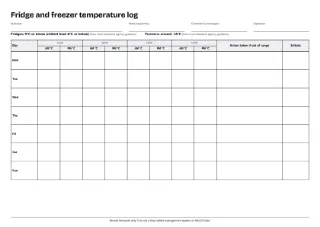
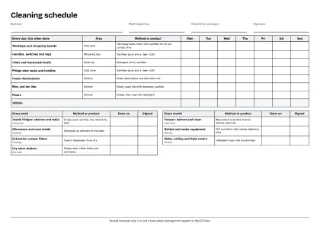
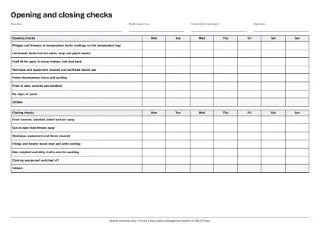
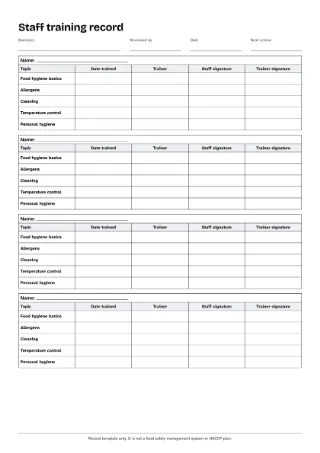
If you want somewhere to write your checks down, these free blank templates print on A4 and are filled in by hand. They are record templates, not a food safety management system or a HACCP plan.
For allergen information, the tool builds an allergen matrix from your menu.
Before the visit: what you can do today
Inspections are usually unannounced, so "before the visit" means any day.
- Check your fridges. In England, Wales and Northern Ireland, keeping chilled food that needs it at 8°C or below is a legal requirement, with some exceptions the law allows; in Scotland it is recommended. Government guidance also advises setting fridges to 5°C or below. Write the readings on a fridge log.
- Read your written food safety procedures against how the kitchen works now. If the menu, a process or a step has changed, review them.
- Keep records of your safety checks and of how you put problems right. Government guidance says your system must keep them.
- Make sure everyone who handles food is supervised and instructed or trained for the work they do. Note who was trained in what on a training record.
- Keep on top of cleaning, repairs and pest control. The English officers' guidance looks for evidence of satisfactory pest control, cleaning and repair. The free cleaning schedule gives you somewhere to record the cleaning.
If you disagree with your rating
If your rating is a 0, 1 or 2, the 30-day plan sets out what to do next, step by step.
- Appeal. Under government guidance in England, and the Welsh and Northern Irish Acts, you can appeal in writing within 21 days of being told your rating. Weekends and bank holidays count. The council must decide within 21 days of receiving the appeal, and the officer who gave the rating does not review it. In Northern Ireland the only valid ground is that the rating does not reflect hygiene standards at the time of the inspection.
- Publication. Ratings of 0 to 4 are published 3 to 5 weeks after the inspection, to allow time for an appeal. A 5 is published as soon as the council uploads it; councils upload at least every 28 days.
- Right to reply. You can send a written reply at any time. It is published online with your rating until you get a new one. The council may edit remarks that are offensive, defamatory, clearly inaccurate or irrelevant.
- Re-rating visit in England. Government guidance says that if you are not rated 5, you can ask for one once you have accepted the rating and made the improvements the officer recommended. There is usually no visit in the first three months after the rating, unless only structural or equipment work was needed. Requests in that window are normally visited within six months, and later requests within three months. Without a fee, one visit is allowed between planned inspections.
- Re-rating in Wales and Northern Ireland. In Wales, the council must carry out a requested inspection within three months once the conditions are met, such as any appeal being decided and the current sticker being displayed. In Northern Ireland, the council has three months to inspect and review the rating, or to explain in writing why it will not.
- Fees. Some councils in England charge for a re-rating visit, and all councils in Wales and Northern Ireland do. There is no national figure. As one dated example, Bath and North East Somerset's policy (updated April 2026) gives £208, checked on 22 November 2026. Check your own council's page.
Wales, Northern Ireland and Scotland
In Wales and Northern Ireland, displaying your rating sticker is a legal requirement. In England, as of November 2026, display is voluntary; the Food Standards Agency is developing proposals for compulsory display, but no date is fixed in law.
Scotland uses a different scheme, the Food Hygiene Information Scheme, run by Food Standards Scotland and councils. It has no 0 to 5 score. The outcomes are Pass or Improvement Required; a new business shows Awaiting Inspection, and some very low-risk premises are Exempt. Pass means the business broadly met legal requirements.
Sources
Last checked: 22 November 2026. The Food Standards Agency's own pages on food.gov.uk could not be read when this guide was checked. The facts here come from GOV.UK, which publishes the Agency's guidance, from legislation.gov.uk, from council documents, and, for Scotland, from Food Standards Scotland. How each fact was checked is on the sources page.
- Food hygiene rating scheme: guidance for businesses (GOV.UK, updated 30 June 2026)
- Food hygiene ratings (GOV.UK, 25 June 2026)
- Food safety inspections (GOV.UK)
- Food Law Code of Practice (England), Annex 1
- Food Law Practice Guidance (England), 25 June 2026, Annex 3
- Derby City Council: food rating scoring explained (April 2018)
- Cheltenham Borough Council: how your food hygiene rating is calculated
- Bath and North East Somerset Council: FHRS policy (April 2026)
- Regulation (EC) No 852/2004, Article 5 (legislation.gov.uk)
- Regulation (EC) No 852/2004, Annex II, Chapter XII: training (legislation.gov.uk)
- Food safety management systems (GOV.UK, 9 September 2026)
- Chilling and freezing (GOV.UK, 25 June 2026)
- Food Hygiene Rating (Wales) Act 2013, sections 5, 7 and 12
- Food Hygiene Rating Act (Northern Ireland) 2016, sections 3, 4 and 7
- Food Hygiene Information Scheme (Food Standards Scotland)